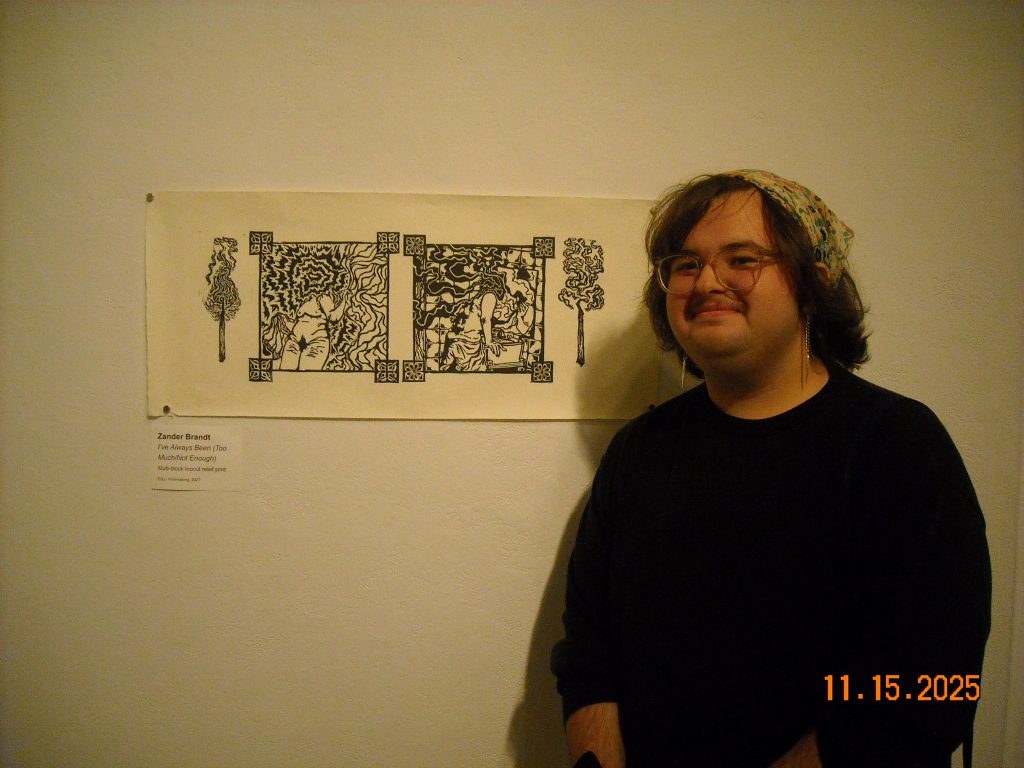
Zander Brandt, ESJ/Printmaking, 2027
Project Overview
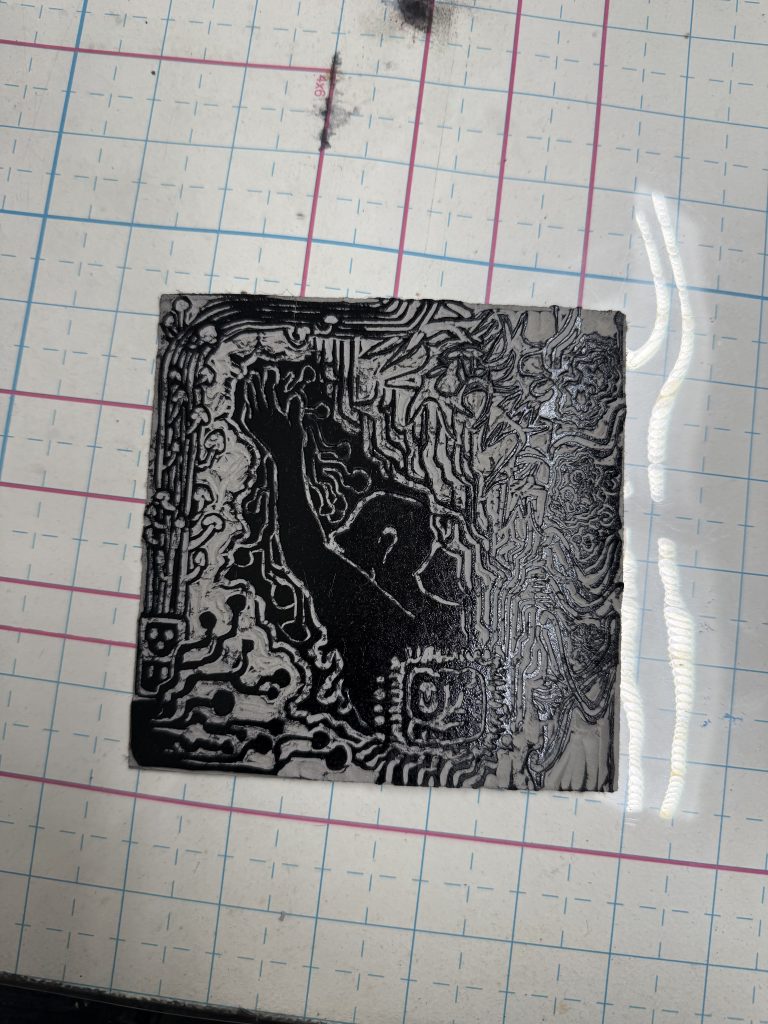
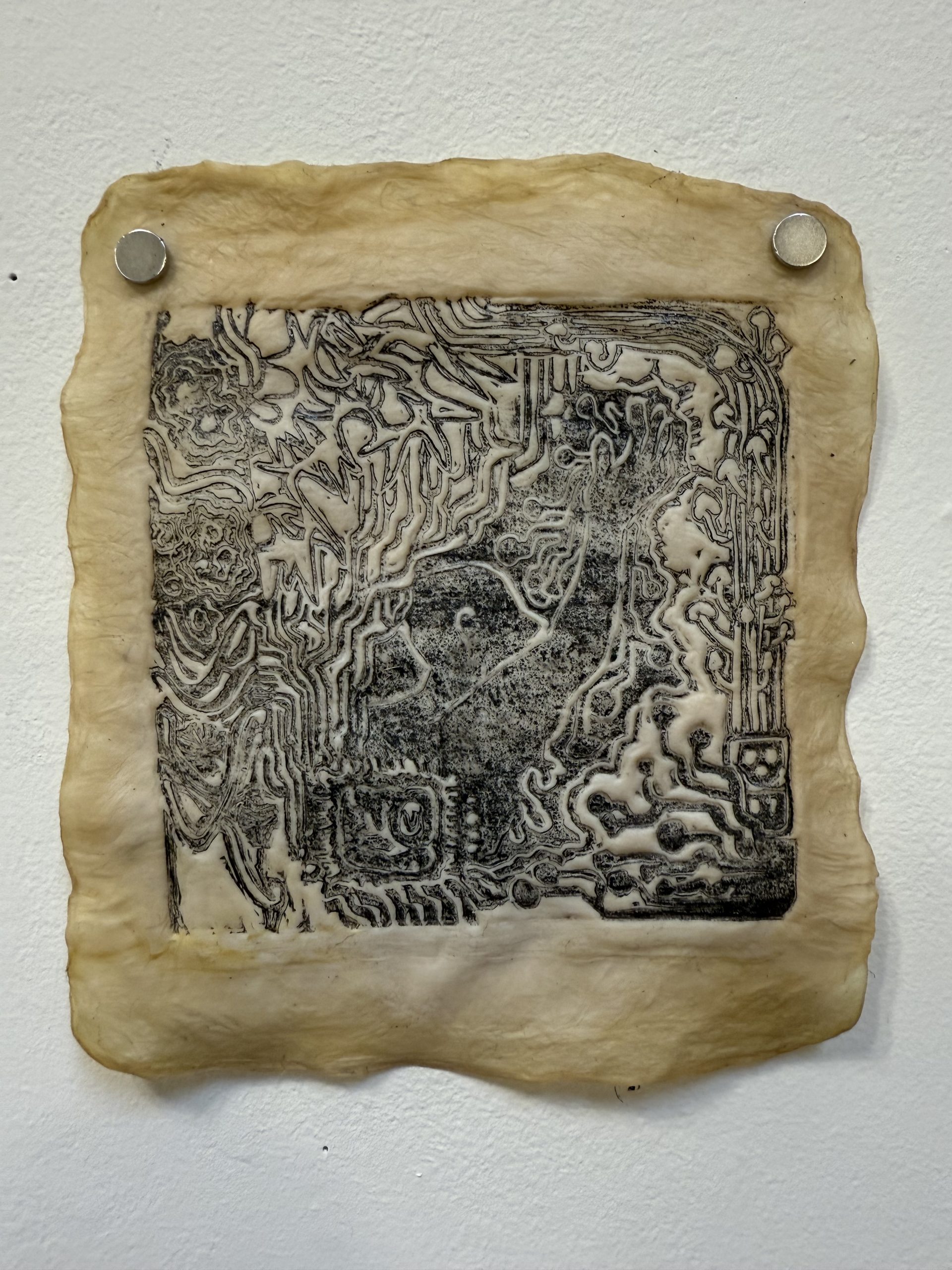
For this project I wanted to use my cellulose pellicle as a surface to print on. The print explores the collaboration and relationship with the organic and synthetic world and how we settle between these two realities. The image came out of exploring more of Donna Haraway’s work and thinking about the industrial infrastructure that exists alongside biological ones.
Process
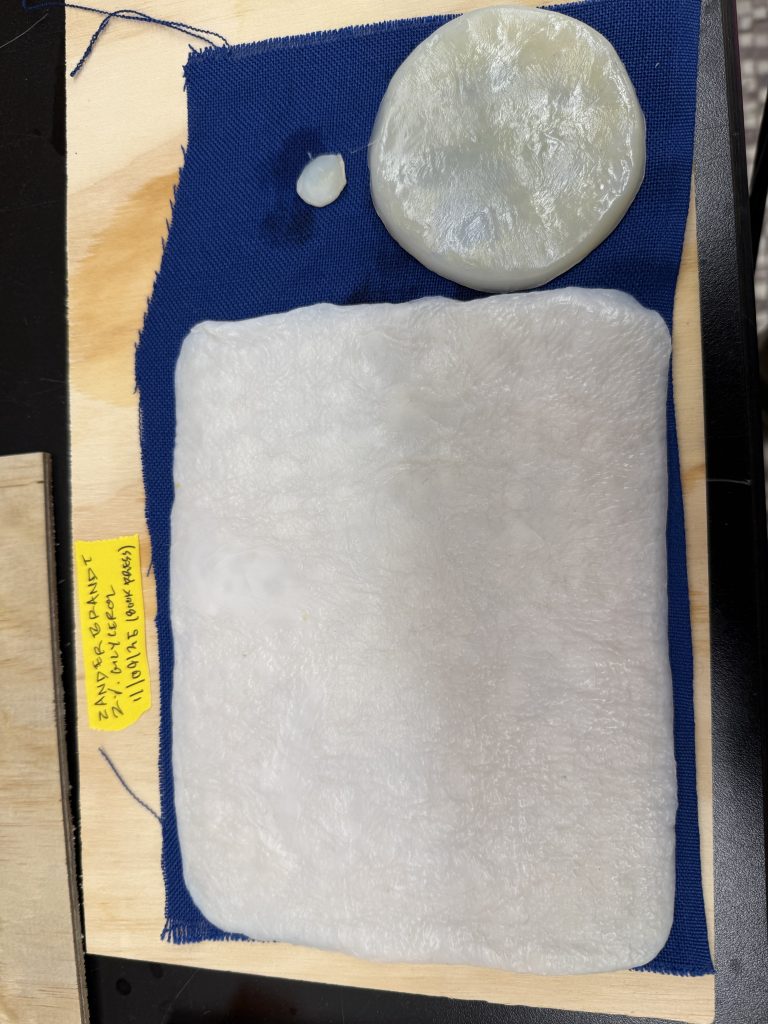
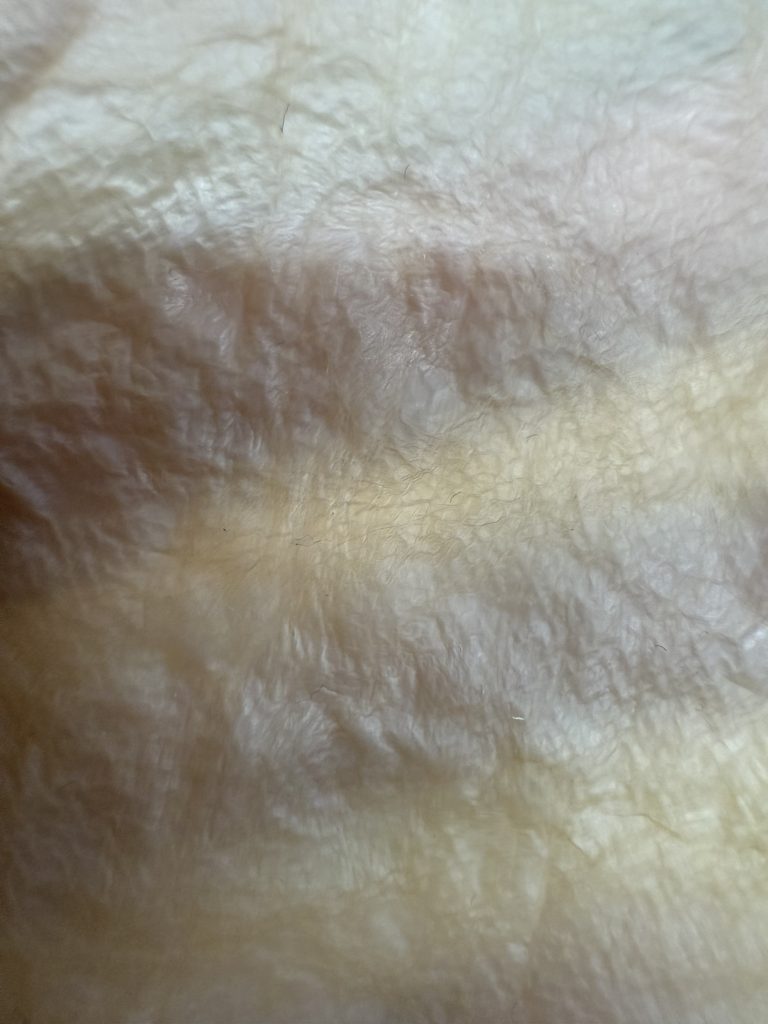
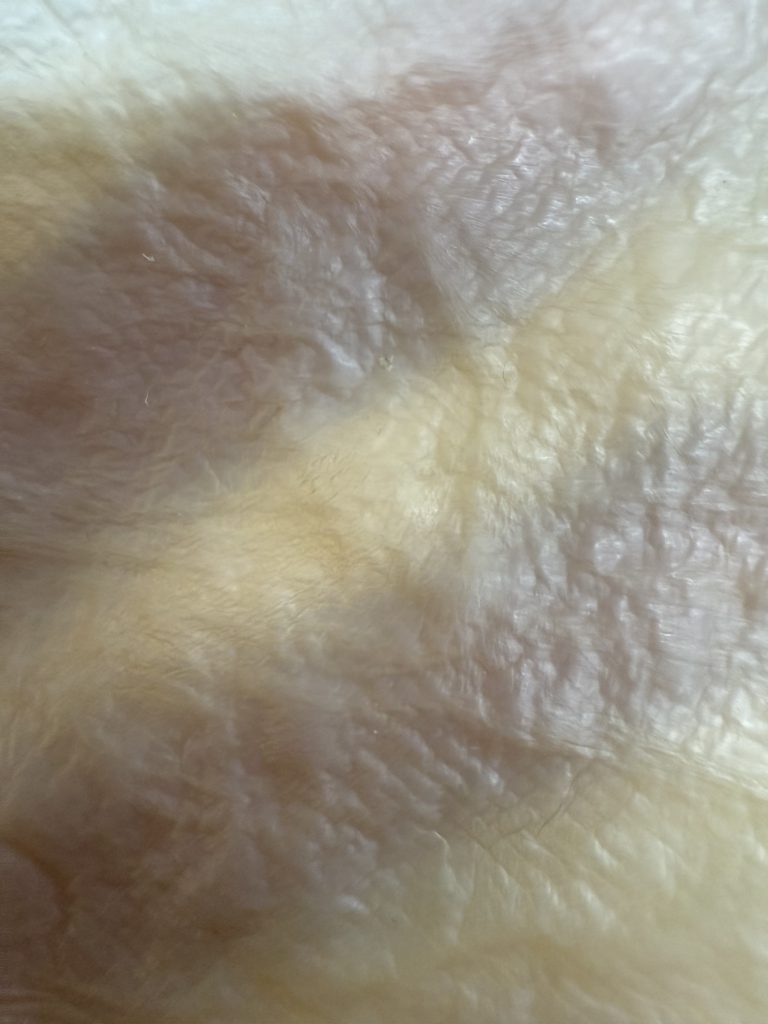
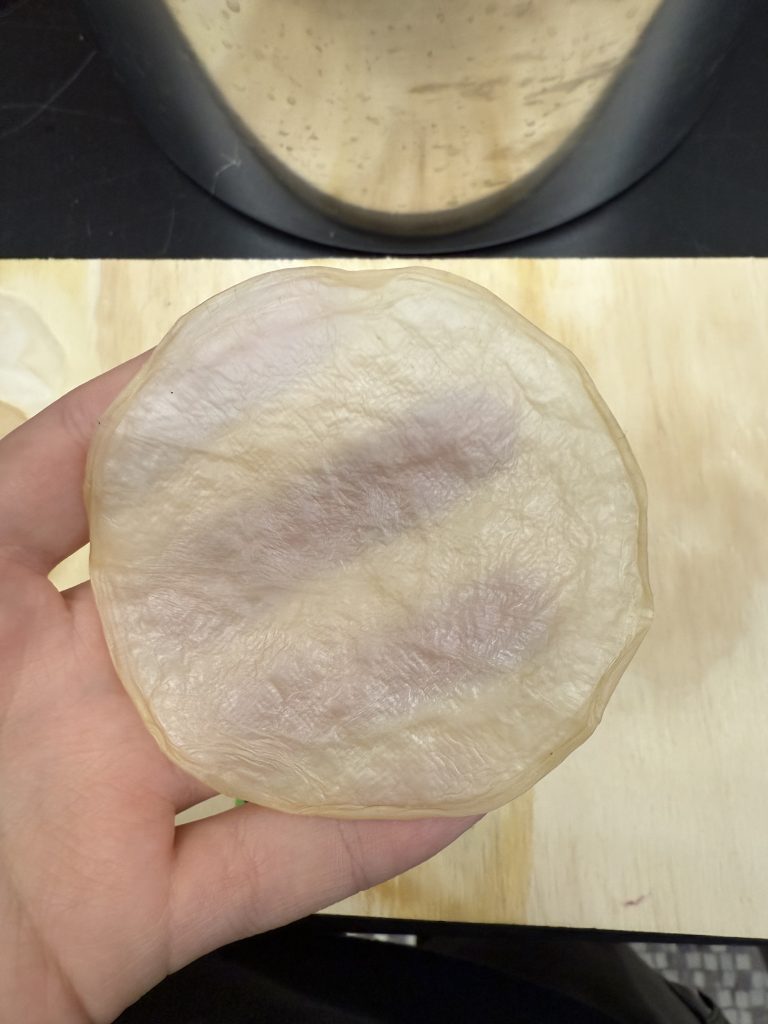
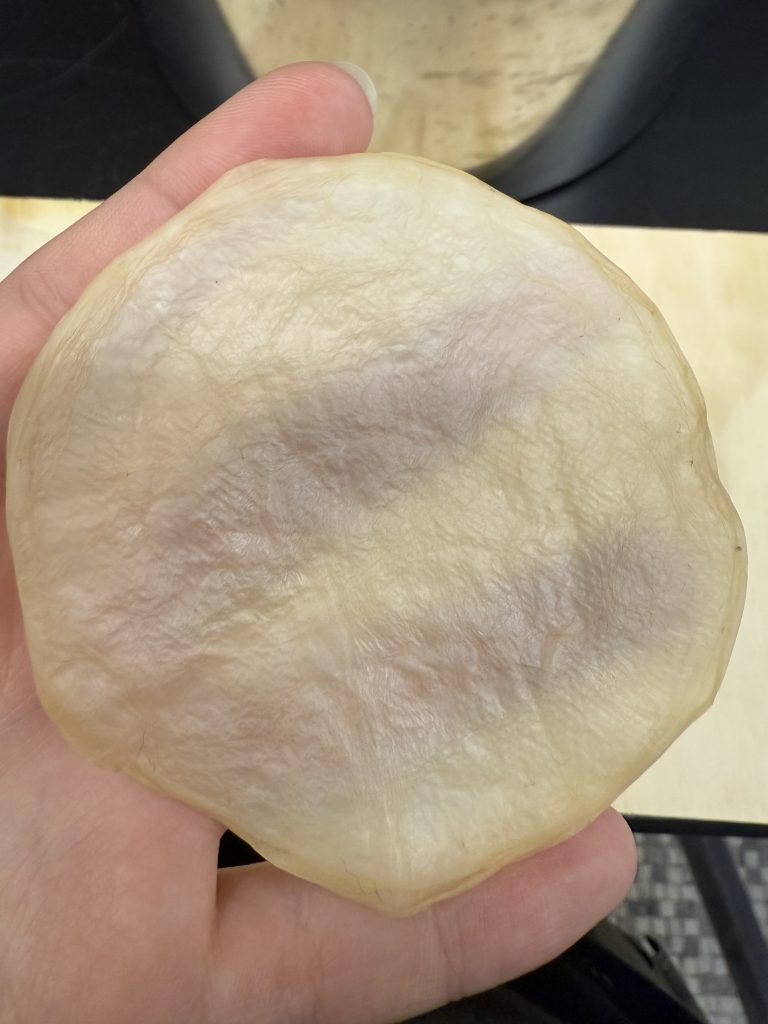
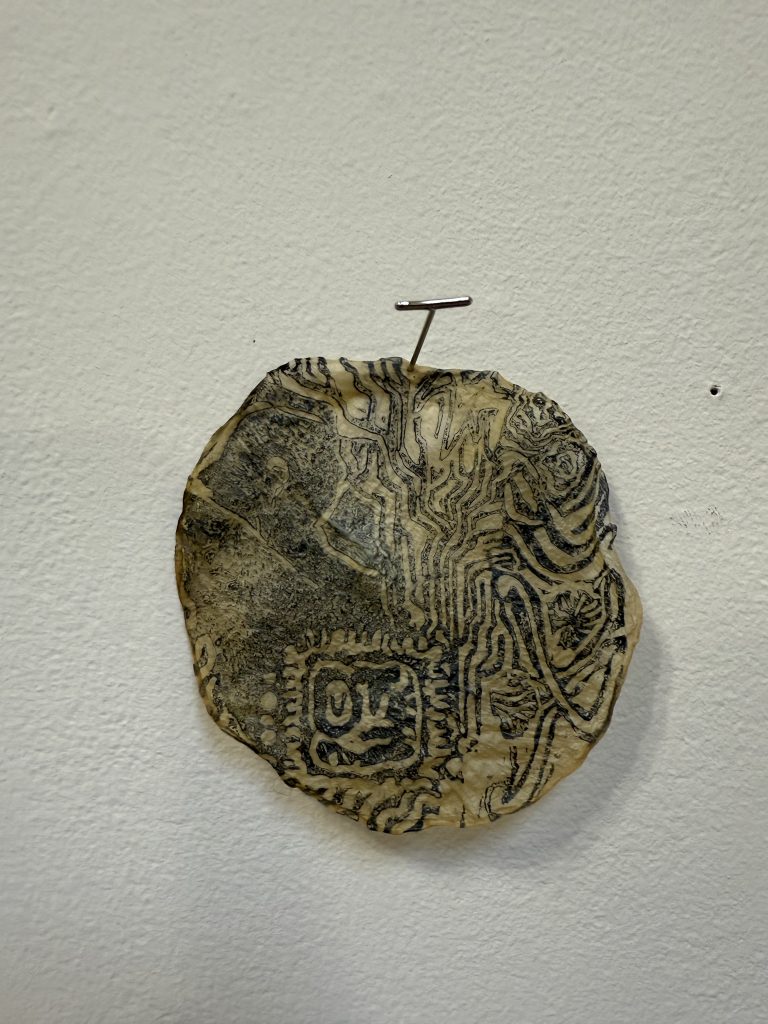
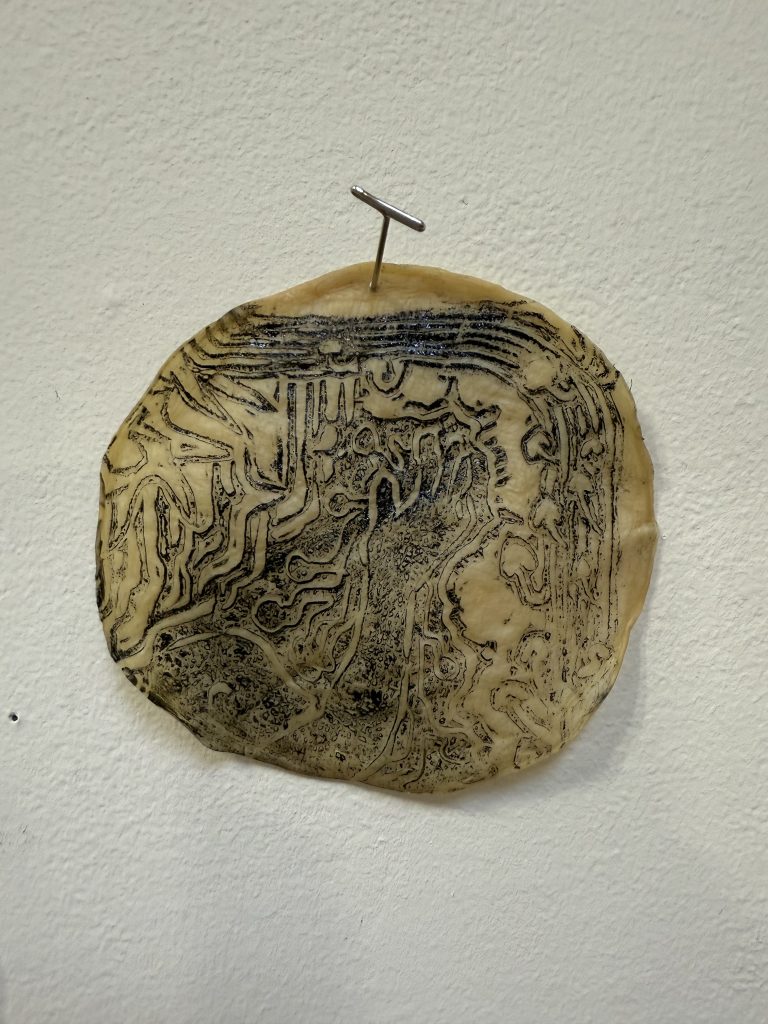
I grew three pellicles, one in a medium size Pyrex dish and two in an erlenmeyer flask. Once bleached and soaked, the pellicles were soaked in a 2% glycerol bath for two days. The first small pellicle to be dried was done as a test. It dried on a canvas woven piece of fabric on top of plywood until it was almost entirely dry. Then the pellicle was removed from the fabric and flipped for the rest of the drying process to keep the texture gained by the fabric. The remaining two pellicles we wrapped in towels and pressed in a book press momentarily to remove as much water as possible before the drying process began. They repeated the first process, drying on the woven canvas and was put in the incubator at a higher temperature for a limited amount of time.
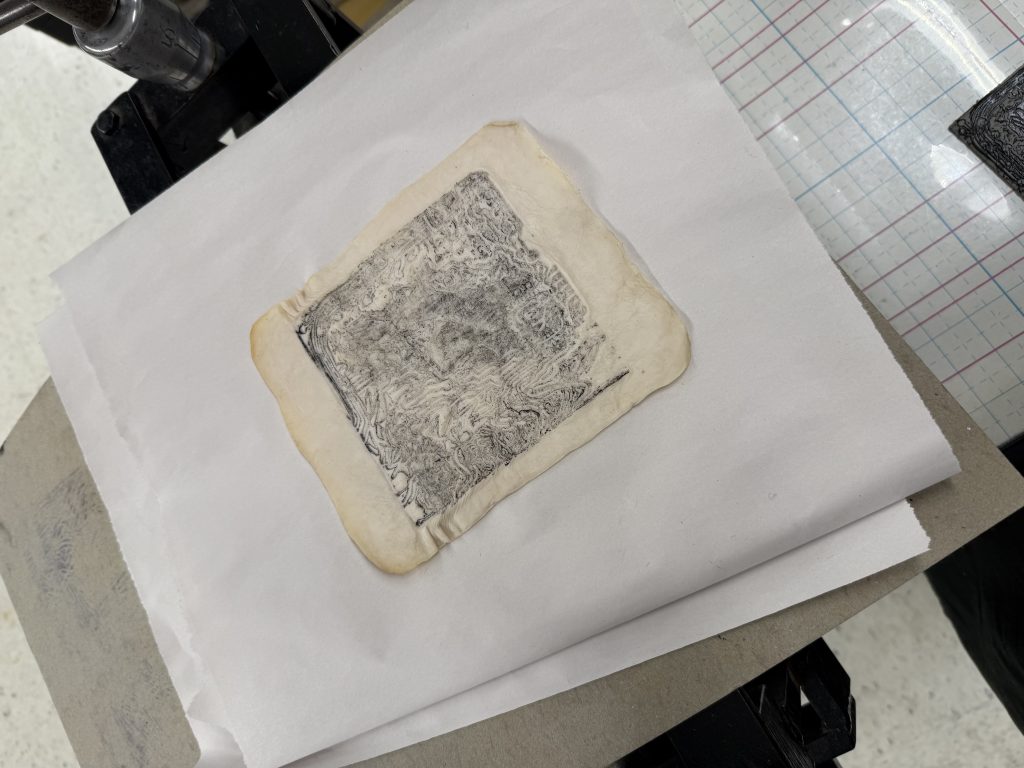
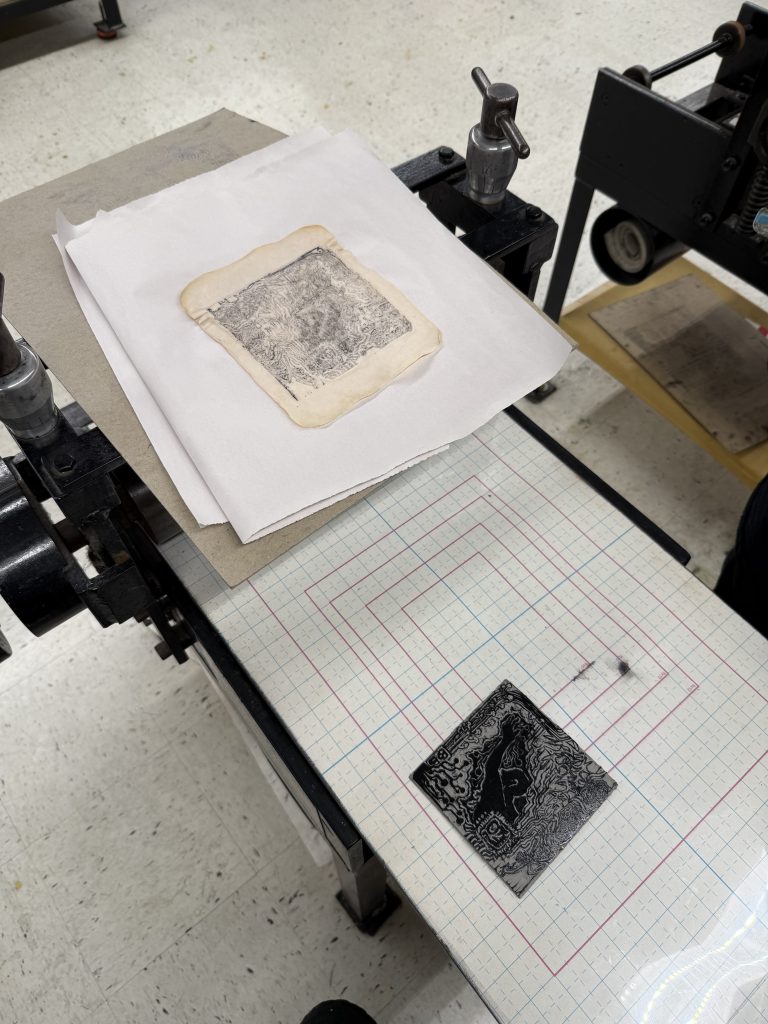
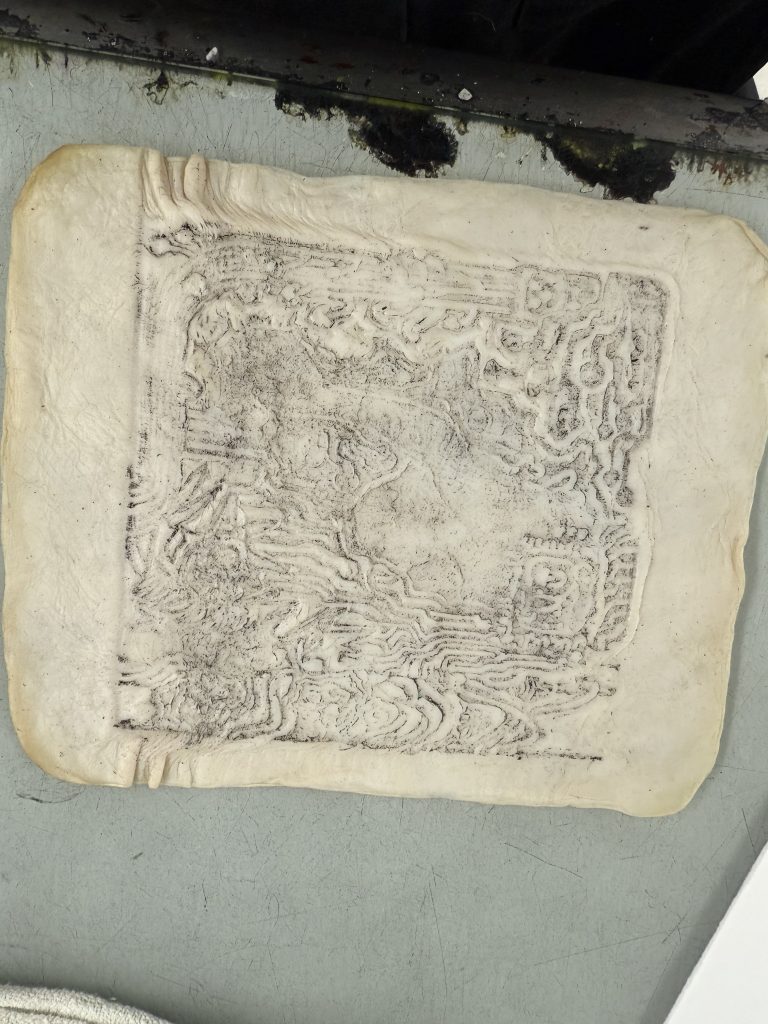
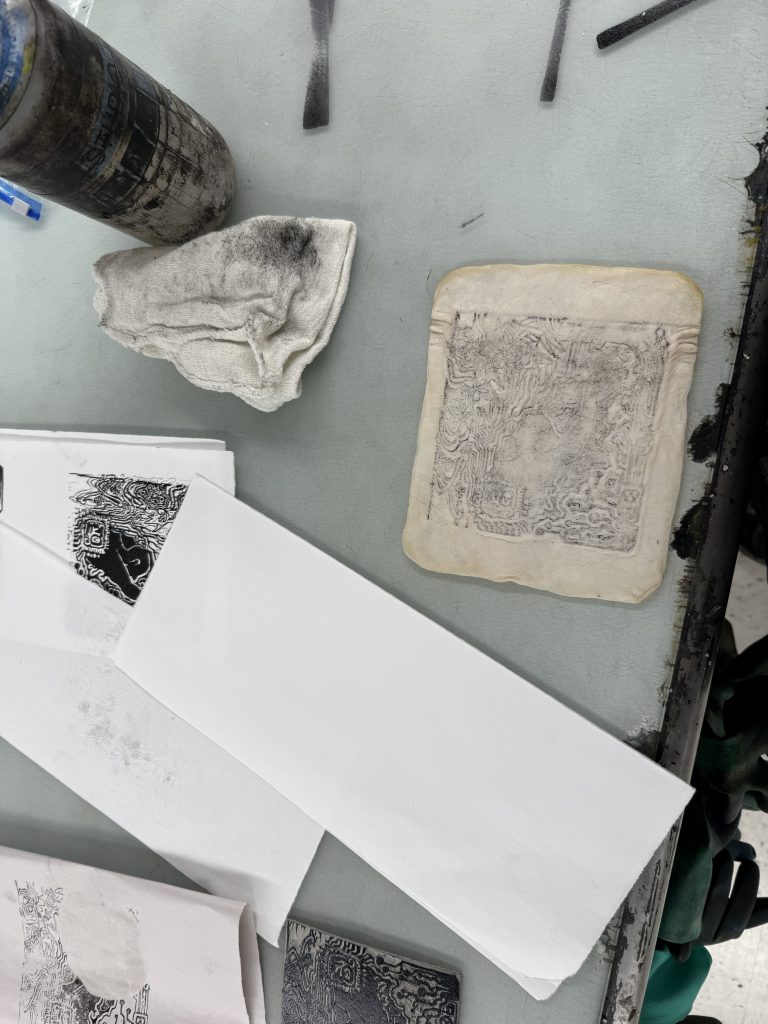
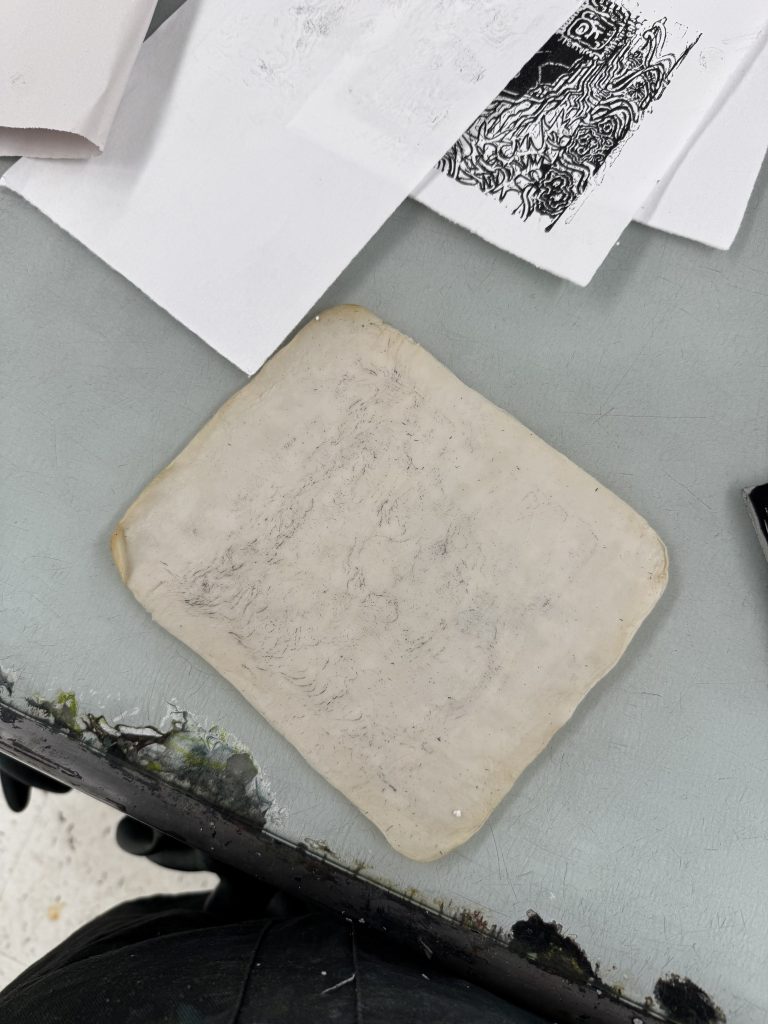
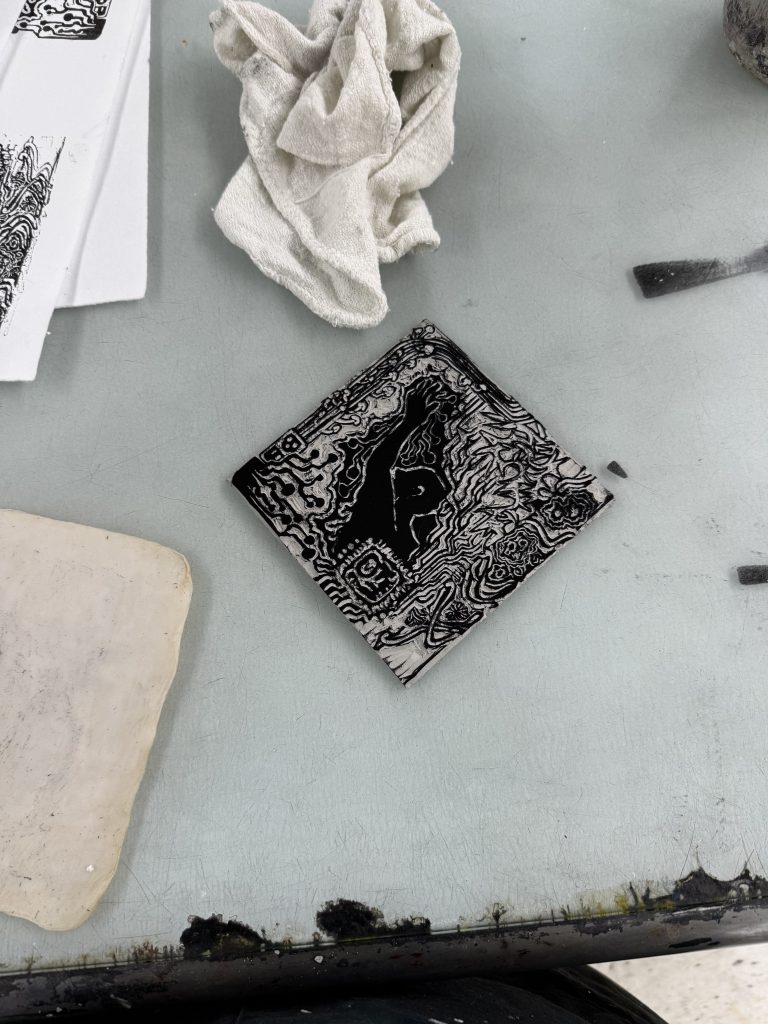
Due to the time constraints of this project, the pellicle was only 80% dry by the time I had to print. For the printing process I inked up the linocut plate with black oil based relief ink. Careful to not set the pressure too high, I adjusted the press pressure to a bit more than kiss impression by rolling a small amount of the pellicle and plate into the press while stacked with newsprint to absorb any remaining moisture. I pulled the initial print and little ink stuck to the pellicle but did have a heavy emboss of the relief. Unsatisfied with the print I gently wiped any transferred ink from the pellicle and ran the pellicle through the press with no plate to rid of any excess moisture and flatten the previous emboss. With less moisture, I inked up the plate once more and pulled another print on the back of the pellicle, this time hand-pressing the print with stacked newsprint and my palm. While not perfect the print pulled was much better than the last and the ink did not resist the surface. The smaller two pellicles that were much more dry were hand pressed in different corners of the image.
The print was displayed with magnets not to piece the surface.